Brass recycling
Shredding, eddy-current separation and XRF-T sorting recover clean brass from mixed scrap.
View equipment and process steps
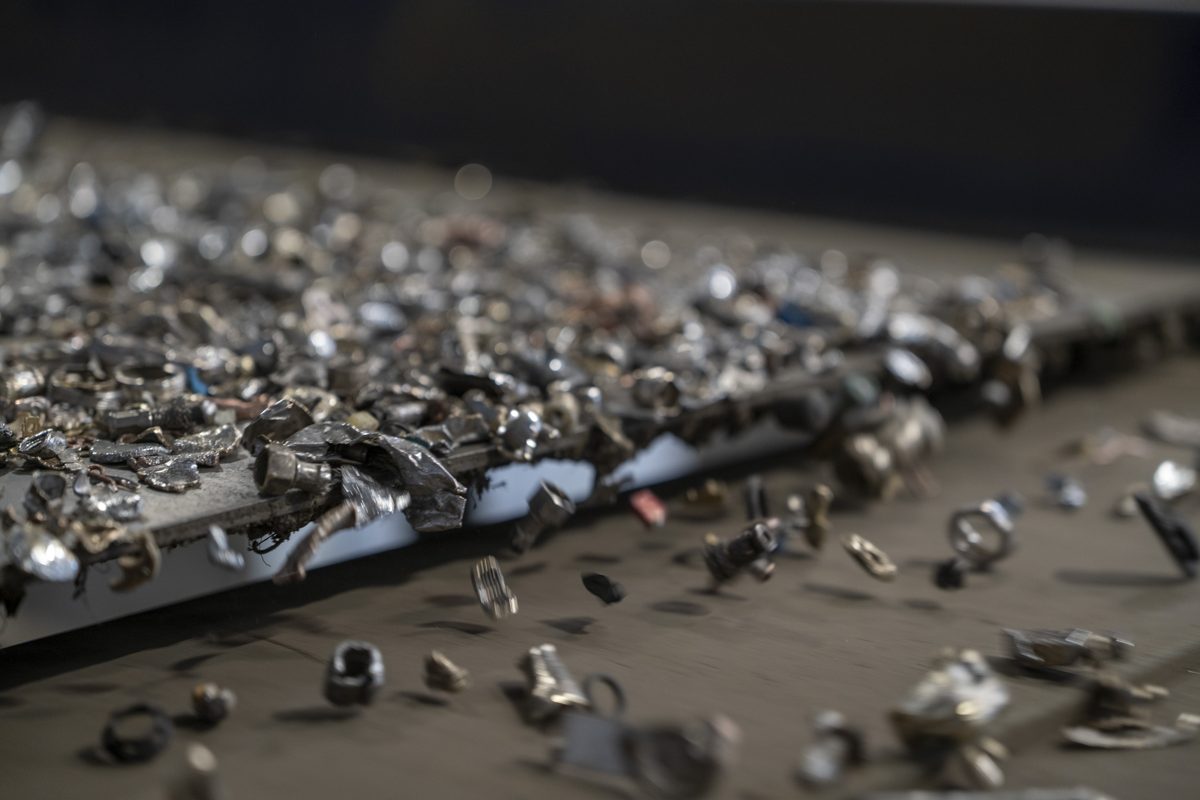
Mixed brass scrap, including taps, plumbing fittings and household items, often contains rubber, plastic, iron, ceramics and circuit boards. This material cannot be sold as received or effectively sorted by hand. A shredder reduces it to pieces no larger than 120 mm, releasing the brass from the other materials. Eddy-current separation and X-ray fluorescence sorting then recover clean brass.
 01
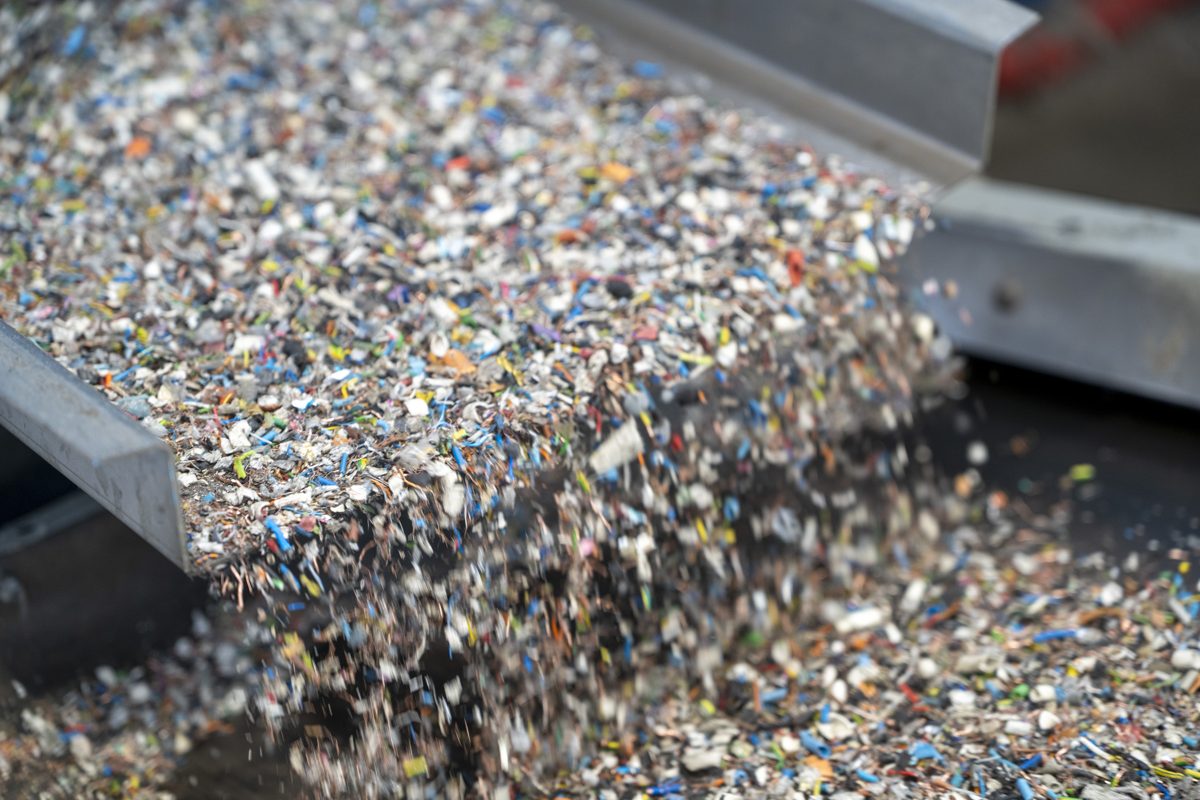
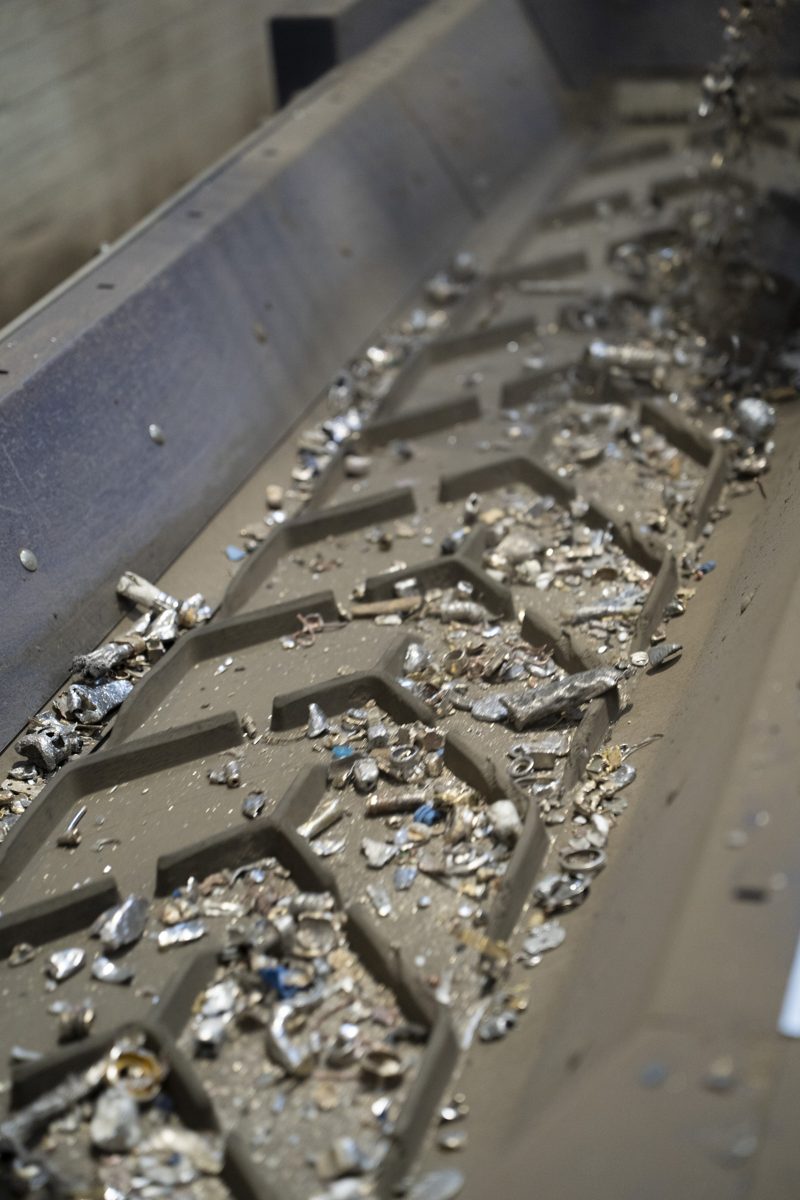
01Material after shredding
The shredded material, with pieces no larger than 120 mm, travels by conveyor to the next sorting stage. The brass has been released from the other materials but has not yet been sorted.
- 02
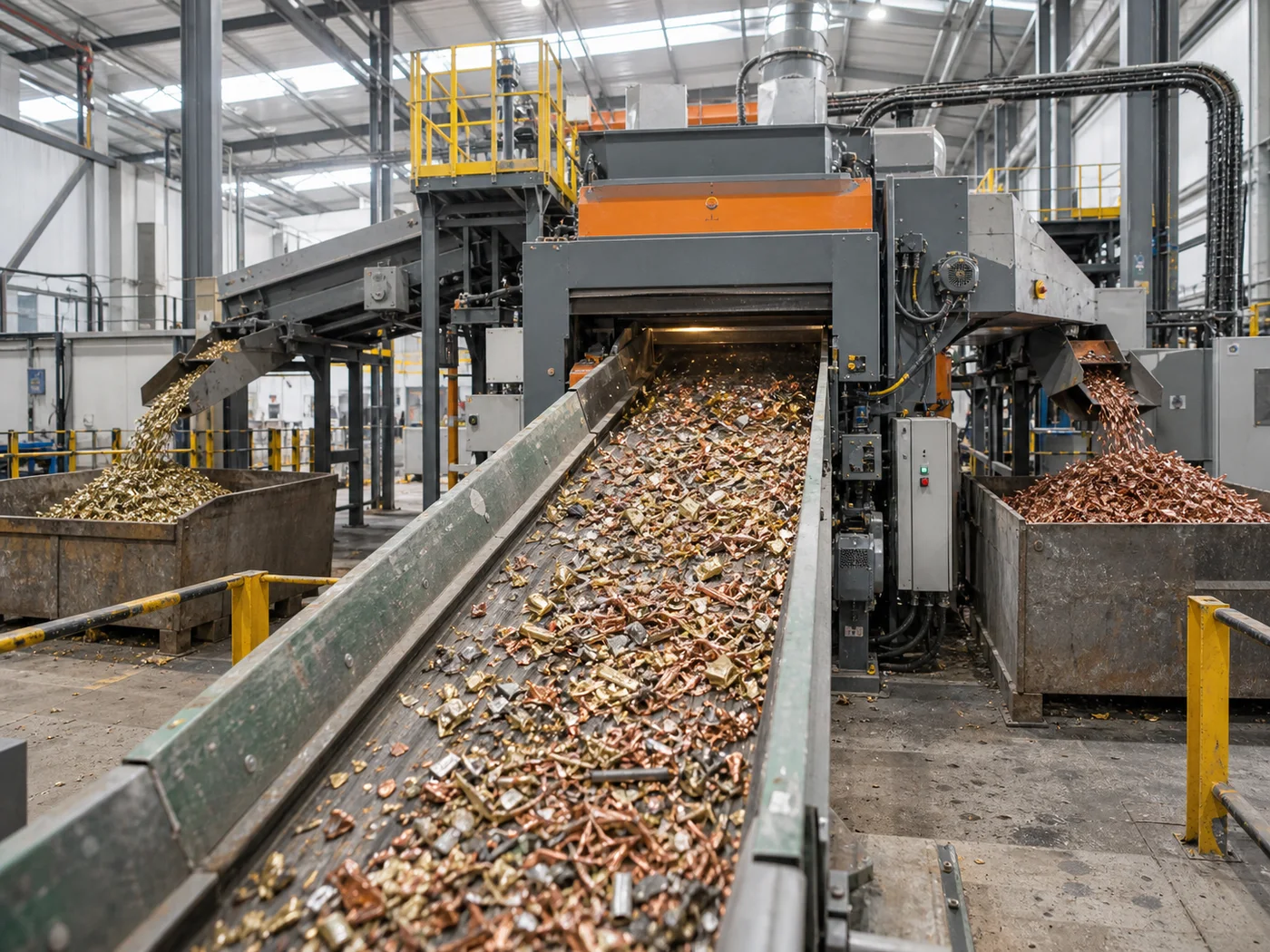
Eddy-current separation
The conveyor feeds material to a rapidly rotating magnetic rotor at the end of the belt. The rotor induces eddy currents in non-ferrous metals such as brass, copper and aluminium. Their magnetic fields repel the metal pieces, propelling them further from the belt. Non-metallic materials such as plastic, rubber and ceramics fall directly below, separating metals from non-metals.
 03
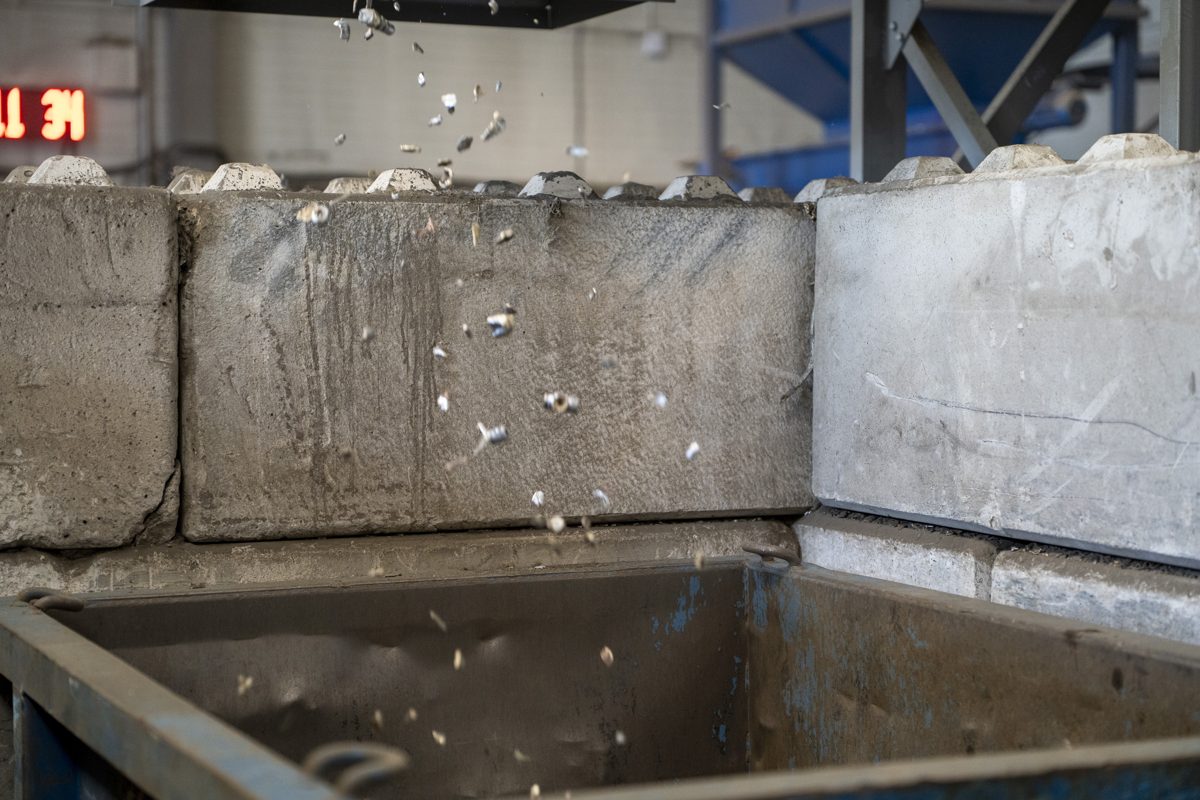
03XRF-T sorting: clean brass
The XRF-T sorter combines two X-ray technologies. X-ray fluorescence (XRF) identifies the chemical composition of each metal piece, while X-ray transmission (T) determines its density. Precise air jets separate the brass pieces, producing clean, shredded brass ready for sale.